|
 |
|

|
||
 |
Lipopolysaccharide Binding Protein (LBP) in Systemic Gram-Negative Infections Stephen F. Carroll,
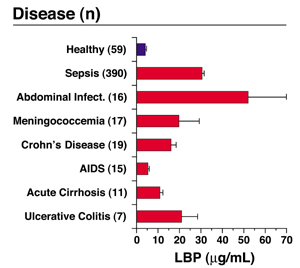
Ph.D. DPC and XOMA, a California-based biopharmaceutical company, recently concluded an agreement for the development and marketing of an assay for lipopolysaccharide binding protein (LBP) on DPC’s patented IMMULITE® platform. The test was developed with XOMA’s patented technology that uses LBP as a biochemical marker for systemic exposure to bacteria and endotoxin. DPC has just introduced IMMULITE LBP outside the US. Reproduced here is a discussion of LBP from XOMA’s Web site—www.xoma.com. LBP (lipopolysaccharide binding protein) may be a useful marker for diagnosis and prognosis of patients with infectious complications caused by exposure to bacteria and endotoxins. Serious and sometimes-fatal complications such as pneumonia, respiratory distress, and blood infections frequently follow infections, surgery or trauma, and affect more than a million patients worldwide every year. XOMA scientists have developed a rapid and accurate diagnostic assay for LBP as part of a comprehensive approach to treating this large category of diseases. Such a test may also contribute to improved clinical trial design in difficult diseases and syndromes like sepsis. XOMA has measured LBP levels in plasma samples from healthy adults and more than 700 patients suffering from 20 different diseases. Elevated LBP levels were seen in patients with conditions involving exposure to bacterial endotoxins, such as meningococcemia, presumed gram-negative sepsis, complicated abdominal infections, and inflammatory bowel disease. (See Figure 1.) Elevated LBP levels have been correlated with poor outcome in sepsis patients. These results prompted XOMA investigators to monitor plasma LBP levels in patients enrolled in several NEUPREX®* studies. Data from meningococcemia and abdominal infection patients shows increased LBP levels in both populations. XOMA has licensed its LBP assay technology to DPC to produce an assay on the IMMULITE automated chemiluminescent EIA platform, to aid in accurate diagnosis and prognosis of patients at risk for infectious complications. Endotoxins and
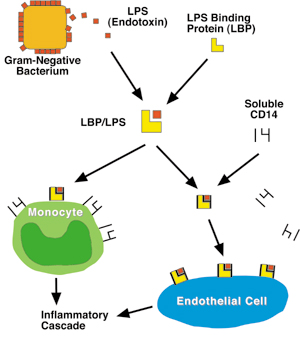
the Systemic Inflammatory Response Gram-negative bacteria and their endotoxins are a causal or complicating factor in many diseases. Invasive systemic infections caused by these organisms (bacteremias) are a well-known source of exposure. Secondary endotoxin exposure may complicate the course of various diseases as well as trauma or surgery. Sometimes an exogenous source of gram-negative infection is identified; in other cases, complications may result from translocation of endogenous gram-negative organisms and endotoxins from the patient’s gastrointestinal tract. Whatever the source, exposure to endotoxin can induce a systemic inflammatory response that involves many interconnected cellular and plasma mediators. This can manifest in clinical signs such as fever, increased heart and breathing rates and other symptoms. The response may be self-limiting, or it may proceed to shock, organ failure and death. Current treatments are limited to antibiotics and supportive intensive care. Advancements in efforts to prevent or treat this systemic inflammatory response syndrome (SIRS) have been hampered by several factors. The lack of a consistent and rapid diagnostic for endotoxin exposure is one. A variety of cytokines and serum proteins have been advanced as candidates for the diagnosis of infections, SIRS and other endotoxin-related conditions, as yet without success. Because of its critical position early in the inflammatory process, lipopolysaccharide binding protein (LBP) may be an ideal target for developing a diagnostic and prognostic product. For more information on DPC’s IMMULITE LBP assay, please contact your National Distributor or Gail Mastright at DPC Corporate Marketing in Los Angeles. * NEUPREX is XOMA’s experimental drug for the treatment of meningococcemia.
|
|||
| Home
- Search
- Site
Map - Contact
Us About DPC - Medical Conditions - Technology - Immunoassay Products - Financial - Employment |